



















Comparison and analysis of permanent magnet brushless DC motors and permanent magnet synchronous motors
Comparison and analysis of permanent magnet brushless DC motors and permanent magnet synchronous motors
time:2022-10-27
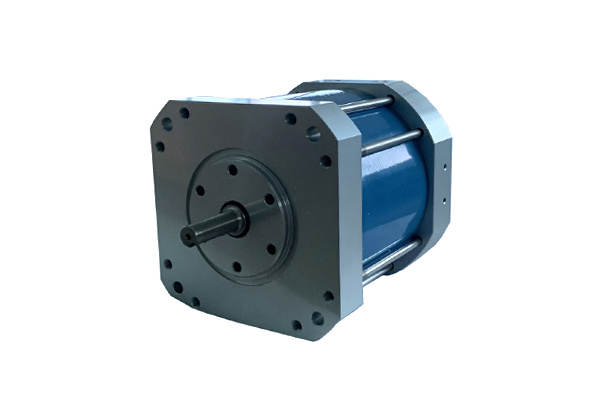
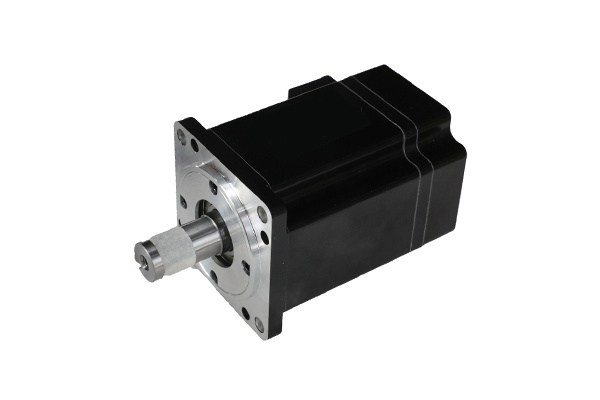
Permanent magnet brushless DC motors and permanent magnet synchronous motors use largely the same materials; the main difference lies in their design.
Brushless DC motors and permanent magnet synchronous motors generally use similar materials; the main difference lies in their design. In brushless DC motor design, the air gap magnetic field is a square wave (trapezoidal wave), and the flatter the top, the better. Therefore, the number of pole pairs usually selects an integer slot concentrated winding, such as 4 poles and 12 slots, and the magnets are usually concentric sector rings with radial magnetization. Hall sensors are usually used to detect position and speed, and the driving method is usually a six-step square wave drive, used in applications where position requirements are not very high; while permanent magnet synchronous motors have a sinusoidal air gap, the more sinusoidal the better, so the number of pole pairs is chosen as a fractional slot winding, such as 4 poles and 15 slots, 10 poles and 12 slots, etc. Magnets are generally bread-shaped and magnetized in parallel. Sensors usually include incremental encoders, rotary transformers, and absolute encoders, etc. The drive method generally uses sinusoidal drive, such as FOC algorithm, etc., and is used in servo applications.
You can distinguish them by their internal structure, sensors, drivers, and applications. These motors can be used interchangeably, but performance will decrease. For most permanent magnet motors with air gap waveforms between the two, the main consideration is the drive method.
In brushless DC motors, the rotor magnets usually adopt a tile-shaped magnet. Through magnetic circuit design, a trapezoidal air gap magnetic density can be obtained. The stator winding usually adopts a concentrated full-pitch winding, so the induced back electromotive force is also a trapezoidal wave. The control of brushless DC motors requires position information feedback, and a position sensor must be used or a sensorless estimation technology must be used to form a self-control speed regulation system. When controlling, the current of each phase is also controlled as a square wave as much as possible, and the inverter output voltage can be controlled by the PWM method of a brushed DC motor. In essence, a brushless DC motor is also a permanent magnet synchronous motor, and speed regulation actually belongs to the variable voltage and frequency speed regulation category.
The commonly mentioned permanent magnet synchronous motor has a three-phase distributed winding stator and a permanent magnet rotor. The magnetic circuit structure and winding distribution ensure that the induced electromotive force waveform is sinusoidal, and the applied stator voltage and current should also be sinusoidal waves, generally provided by an AC variable voltage and frequency converter. Permanent magnet synchronous motor control systems often use self-control and require position feedback information. Advanced control strategies such as vector control (field-oriented control) or direct torque control can be used.
The difference between the two can be considered as the different design concepts caused by square wave and sinusoidal wave control.
Finally, let's correct a concept: "DC variable frequency" is actually AC variable frequency, but the controlled object is usually called a "brushless DC motor".
In my understanding, the difference between BLDC and PMSM is really hard to say, sometimes it depends on the application. Traditionally, their back electromotive forces are different: BLDC is close to a square wave, and PMSM is close to a sine wave. In terms of control, BLDC generally uses a 6-step square wave drive to control the phase and turn-off time of the square wave, while PMSM uses FOC. In terms of performance, BLDC has a higher output power density because BLDC's torque makes full use of harmonics, and therefore BLDC's harmonics will be more serious.
1. Brushless DC motor body:
Stator winding is concentrated winding, permanent magnet rotor forms square wave magnetic field; Permanent magnet synchronous motor body: Stator winding is distributed winding, permanent magnet rotor forms sinusoidal magnetic field;
2. Position sensor of brushless DC motor:
Low resolution, 60-degree resolution, Hall element, electromagnetic, photoelectric; Position sensor of permanent magnet synchronous motor: High resolution, 1/256, 1/1024, rotary transformer, optical encoder;
3. Different control:
Brushless DC motor: 120-degree square wave current, using PWM control;
Permanent magnet synchronous motor: Sinusoidal current, using SPWM SVPWM control.
Brushless DC motor: The magnet is square wave magnetized, the control voltage PWM is also square wave, and the current is also square wave. There are 6 spatial vectors in one electrical cycle. The control is simple and the cost is low, and it can be realized by a general MCU.
Permanent magnet synchronous motor: The magnet is sinusoidal magnetized, the back electromotive force is also sinusoidal, and the current is also sinusoidal. Generally, vector control technology is adopted. There are at least 18 vectors in one electrical cycle (of course, the more the better), and a high-performance MCU or DSP is required to realize it.
DC servo: This range is very wide. DC servo refers to the operation of a DC motor under the control of a control system according to control instructions (speed, position, angle, etc.), generally used for actuators.
I. Different sensors:
Brushless DC motor (BLDC): Position sensor, such as Hall sensor;
Permanent magnet synchronous motor (PMSM): Speed and position sensor, such as rotary transformer, photoelectric encoder;
II. Different back EMF waveforms:
BLDC: Approximately trapezoidal wave (ideal state);
PMSM: Sinusoidal wave (ideal state)
III. Different three-phase current waveforms:
BLDC: Approximately square wave or trapezoidal wave (ideal state);
PMSM: Sinusoidal wave (ideal state)
IV. Differences in the control system:
BLDC: Usually includes position controller, speed controller and current (torque) controller;
PMSM: Different control strategies will have different control systems;
V. Differences in design principles and methods:
BLDC: Try to widen the width of the back EMF waveform (making it approximate a trapezoidal wave);
PMSM: Make the back EMF close to a sine wave;
This is reflected in the design mainly in the differences in stator windings and rotor structure (such as pole arc coefficient).
Related News





Address: No. 158, Yangguang Road, Luoyang Town, Wujiang District, Changzhou City, Jiangsu Province
Contact Person: Wu Jintao
Email:market-03@duoweimotor.com
Coprright © 2025 Changzhou Duowei Electric Co., LTD., ALL Rights Reserve.